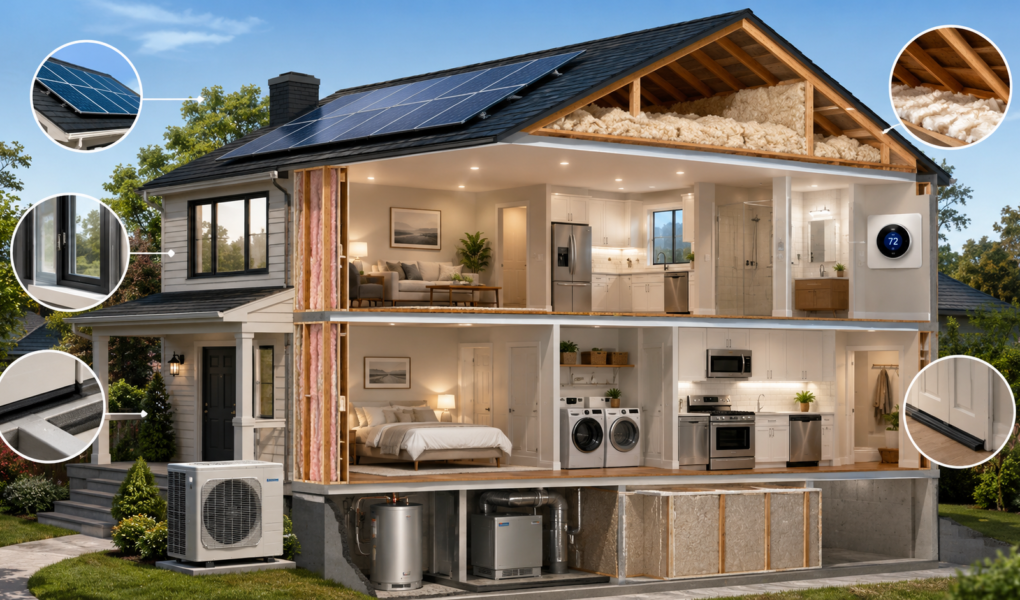
If your energy bills seem to climb every season no matter how careful you are with the thermostat, the problem probably isn’t your habits. It’s your house.
Homes lose energy in predictable ways: through the roof, around windows, under doors, and through outdated equipment that has to work overtime just to keep up. The upside is that once you know where that energy is escaping, fixing it becomes a lot more straightforward. Some of these fixes take an afternoon. Others are bigger investments that pay off over years. Either way, here are ten improvements worth putting on your list.
1. Beef Up Your Attic Insulation
Heat always moves toward cold, which means your attic is doing a lot of quiet work all year round. In winter, it’s the escape route for the warm air you’re paying to generate. In summer, it turns into an oven that pushes your AC to work harder than it should.
Before you add more insulation, take a look at what’s already up there. Check for moisture damage, compression, or gaps where the material has settled or shifted. Insulation requirements vary by climate and local building codes, so it’s worth checking what level makes sense for your area before buying materials.
Done well, this is one of the highest-impact upgrades you can make, since it directly reduces how hard your heating and cooling system has to work, room by room.
2. Track Down and Seal Air Leaks
A single gap here or there doesn’t sound like much, but add them all up and you’ve got a house that’s basically breathing out conditioned air around the clock.
The usual suspects include:
- Window frames
- Exterior doors
- Attic access hatches
- Plumbing penetrations
- Electrical outlets
- Pipe entry points
- Vent openings
- Baseboards
Use caulk for gaps that don’t move — cracks, seams, stationary joints — and save weatherstripping for anything that opens and closes, like doors and windows.
Your exterior doors deserve extra attention here. If you can see a sliver of daylight around the frame, or feel even a slight draft with the door shut, that seal needs work.
This is also one of the cheapest fixes on the list, which makes it a smart first move before you spend money on anything bigger.
3. Consider Upgrading Your Windows
Old single-pane windows are notorious for letting heat move freely between inside and outside, which forces your HVAC system to constantly compensate.
Newer windows typically use two or more panes with insulating gas between them, better-performing frame materials, and sometimes special coatings designed to block unwanted heat transfer.
That said, full replacement isn’t always necessary. If your existing windows are structurally sound, start with cheaper fixes — repairing worn seals, adding weatherstripping, or using heavier window coverings. Replacement becomes the better call once frames are warped, the glazing has failed, or drafts just won’t go away no matter what you try.
4. Install a Smart or Programmable Thermostat
There’s no reason to heat or cool an empty house all day.
A programmable thermostat lets you set a schedule that matches your actual routine. A smart thermostat takes it further, often adding remote control, learning your habits, and showing you where your energy is going.
A common setup: ease off heating or cooling while everyone’s out at work, then have the house back to a comfortable temperature by the time people walk in the door.
One habit worth breaking, though — cranking the thermostat to an extreme in hopes of heating or cooling the room faster. It doesn’t actually speed things up, and it usually just wastes energy.
5. Improve Your Wall Insulation
Walls make up most of your home’s exterior surface area, so if they’re poorly insulated, you’re losing (or gaining) heat across a huge footprint.
What you can actually do here depends a lot on how your house was built. If your walls have accessible cavities, insulation can often be added without tearing anything apart. Older homes, solid-wall construction, or heavily renovated properties may need a different approach entirely.
This project tends to be more disruptive than attic work, so it’s worth getting the structure assessed first. Done right, it evens out indoor temperatures and gets rid of that cold-to-the-touch feeling near exterior walls in winter.
6. Upgrade Your Heating and Cooling System
Your HVAC system is likely one of the biggest line items in your energy bill, and older units simply need more energy to deliver the same comfort a newer model would provide with less.
It’s probably time to look at replacement if your system is:
- Breaking down often
- Getting expensive to repair
- Struggling to hit or hold a comfortable temperature
- Well past its expected lifespan
- Clearly less efficient than newer options on the market
One thing to watch for: bigger isn’t automatically better. An oversized system cycles on and off too frequently, while an undersized one runs constantly without ever quite catching up. A qualified HVAC professional can factor in your square footage, insulation, local climate, and ductwork to recommend the right size for your home.
7. Seal and Insulate Your Ductwork
If your home uses central heating or cooling, ducts are what carry that conditioned air to every room. When they leak, a chunk of that air ends up in your attic or crawl space instead of your living room.
Common culprits include loose connections, damaged sections, thin or missing insulation, and gaps at the joints.
You can eyeball accessible ductwork for obvious problems, but hidden runs usually need a professional to test properly. Sealing leaks and insulating any ducts running through unconditioned spaces means more of what your system produces actually reaches the rooms that need it.
8. Swap Out Inefficient Lighting
This is the easiest upgrade on this entire list.
Switching from incandescent bulbs to LEDs cuts electricity use significantly and gets you a much longer bulb life in return. LEDs come in a wide range of brightness levels and color temperatures now, so there’s no real trade-off in most rooms.
You don’t need to replace every bulb in the house at once. Start with the fixtures that stay on the longest — kitchens, living rooms, hallways, and outdoor lighting are usually the biggest offenders.
And don’t underestimate natural light. Opening curtains during the day can cut down on how much artificial lighting you need in the first place.
9. Make Your Water Heating More Efficient
Hot water gets used constantly — showers, laundry, dishes, cleaning — which makes it a steady, everyday energy cost.
A few fixes go a long way here. Insulating exposed hot-water pipes helps water stay warm as it travels from the heater to the tap. Fixing a leaking hot-water faucet stops you from wasting both water and the energy it took to heat it. Low-flow showerheads reduce hot water use without making showers feel noticeably worse.
If your water heater is getting old, compare newer models on efficiency, capacity for your household size, and installation cost — not just the sticker price.
10. Upgrade Doors and Window Coverings
Doors lose energy the same way windows do, especially if they’re damaged, poorly fitted, or lack proper insulation.
Before you replace a door, check the frame, threshold, and weatherstripping first. Often that’s all it takes to fix the problem, at a fraction of the cost of a new door.
Window coverings matter more than people expect, too. Insulated curtains, blinds, and shades add a real barrier against heat movement. Close them on sun-facing windows during hot afternoons to keep rooms cooler, and use them in winter to add a buffer between the room and cold glass.
These coverings work best alongside properly sealed windows and doors — one without the other only gets you halfway there.
Where to Start: Get an Energy Assessment
You don’t have to guess which project to tackle first.
A home energy assessment identifies exactly where you’re losing energy, typically covering insulation, HVAC equipment, windows, doors, ventilation, and air leakage. Once you know your weak points, you can prioritize based on cost, urgency, and expected payoff.
Order matters here, too. Replacing a heating system before fixing a leaky, poorly insulated attic means that new system is still fighting an uphill battle. Fix the building envelope first, and whatever equipment you install afterward will run more efficiently from day one.
Weigh Cost, Payback, and Comfort Together
The cheapest project isn’t always the smartest one, and the priciest upgrade isn’t automatically the best investment.
When you’re deciding what to tackle, weigh three things:
Energy savings — How much waste does this actually address?
Project cost — What’s the real total, including materials, labor, and upkeep?
Comfort — Will it make your home warmer in winter, cooler in summer, or less drafty overall?
Some upgrades pay off in ways that don’t show up on your energy bill at all. Better insulation smooths out temperature swings. Air sealing cuts down on drafts. A properly sized HVAC system delivers steadier, more even comfort throughout the house. Factor those benefits in, and it gets a lot easier to see which projects are actually worth your money.
FAQ
What’s the single most cost-effective energy upgrade?
Sealing air leaks around doors, windows, and other openings usually delivers the best return for the least money. It’s inexpensive, doesn’t require special tools, and can noticeably reduce drafts almost immediately.
Is it better to upgrade insulation or replace windows first?
Insulation, in most cases. Attics and walls typically account for more total heat loss than windows, and insulation projects are often less expensive per square foot of coverage.
How often should HVAC systems be replaced?
Most systems last 10 to 15 years, though this varies by usage, maintenance, and climate. If your system needs frequent repairs or can no longer hold a steady temperature, it’s worth getting a replacement quote even if it hasn’t hit that age range yet.
Do LED bulbs really make a noticeable difference?
Yes. LEDs use significantly less electricity than incandescent bulbs and last far longer, so the savings show up both on your energy bill and in how often you’re buying replacement bulbs.
Is a home energy assessment worth the cost?
For most homeowners, yes. It gives you a clear, prioritized list of where you’re losing energy instead of guessing, which helps you avoid spending money on upgrades that won’t move the needle much.
Conclusion
You don’t need a full renovation to bring your energy bills down. Small, affordable projects — sealing air leaks, switching to LED lighting, dialing in your thermostat — are a great place to start and often deliver quick wins. Bigger investments like insulation, efficient windows, and updated HVAC equipment take more time and money but tend to pay off for years to come.
The right approach depends on your home’s age, condition, and construction. Start by finding out where your energy is actually going, tackle the biggest problems first, and choose upgrades that fit your budget and timeline. Do that consistently, and you’ll end up with a home that’s not just cheaper to run, but genuinely more comfortable to live in.