When summer temperatures climb, choosing the right cooling system can make a major difference in comfort, efficiency, and long-term costs. Central AC and ductless mini-split systems offer different ways to cool a home, and the best choice depends on your space, existing setup, and comfort goals. Understanding the differences before installation can help you avoid costly mistakes and get dependable performance. This guide compares both systems, explains what to consider before installation, and shows why professional planning matters when evaluating air conditioning installation options for your home.
Central AC vs. Ductless: Understanding the Basics
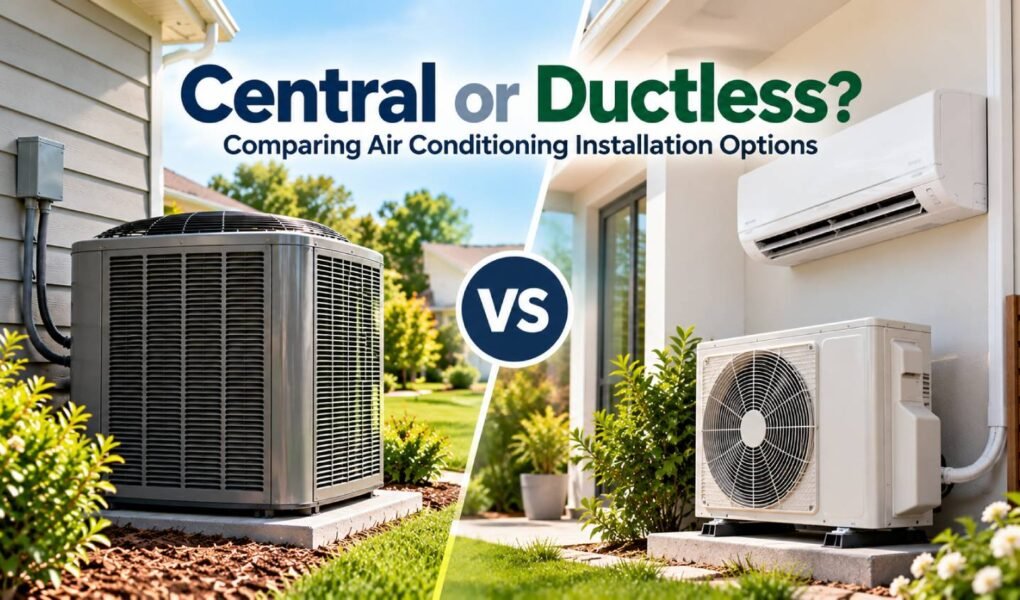
Central air conditioning uses a central cooling unit to distribute conditioned air throughout the home through ductwork. It is particularly practical for homes that already have a suitable duct system and need consistent cooling across multiple rooms.
Ductless systems, commonly known as mini-splits, use individual indoor units connected to an outdoor unit. They can provide targeted heating and cooling without requiring traditional ductwork, making them a flexible option for specific spaces or homes where extending ducts is impractical.
When Central AC Makes Sense
Central AC can be a strong choice when a home already has properly designed ductwork. It provides whole-home cooling from one system and can work well alongside an existing furnace.
Professional installation should include a home evaluation, load calculation, and ductwork inspection. These steps help determine the appropriate system size and configuration instead of relying solely on the home’s square footage.
When Ductless Cooling May Be Better
Ductless mini-splits can offer greater flexibility when individual areas need more precise temperature control. Because they do not depend on traditional ductwork, they can also simplify installation in spaces where adding or modifying ducts would be difficult.
They can provide both heating and cooling, which may make them useful for homeowners seeking year-round comfort from one system. Before choosing this approach, consider how many areas need conditioning and whether individual indoor units fit your preferences.
Key Factors to Consider Before Installation
The right system is not simply the one with the lowest initial price. Your home’s layout, existing HVAC equipment, ductwork, energy goals, and desired comfort level all influence the decision.
Consider these factors during your consultation:
- Existing ductwork: Central AC may be practical when ducts are already in good condition.
- Home layout: Ductless systems can provide targeted comfort in selected areas.
- Heating needs: Some ductless systems provide both heating and cooling.
- System sizing: Proper load calculations help prevent inefficient operation.
- Controls: Smart thermostat integration can provide convenient temperature management.
A professional evaluation can reveal issues that are easy to overlook, including undersized or inefficient ductwork. It also helps ensure the selected equipment matches the home’s actual cooling requirements.
Why Professional Installation Matters
Even a high-efficiency air conditioner can perform poorly if it is incorrectly sized or installed. Professional technicians evaluate the home, inspect relevant components, configure the system correctly, and verify that it operates as intended.
For homeowners comparing air conditioning installation options, professional guidance can make the decision easier. A qualified HVAC team can explain whether central AC or a ductless solution better fits the existing setup, comfort priorities, and efficiency goals.
Installation may also include smart thermostat setup, zoning integration, ductwork adjustments when necessary, and optional indoor air quality improvements. These details can influence how comfortable and efficient the finished system feels.
Plan for Long-Term Performance
Installation is only the beginning. Regular maintenance helps keep cooling equipment operating efficiently and can reduce the likelihood of unexpected problems. Filters, coils, electrical components, refrigerant levels, and other system components should receive appropriate professional attention.
It is also wise to ask about warranty coverage, maintenance recommendations, equipment efficiency, and future service requirements before approving an installation.
FAQs
Q. 1 Is central AC better than ductless cooling?
Neither is universally better. Central AC can be ideal for whole-home cooling when suitable ductwork is available, while ductless systems offer flexible, targeted conditioning without traditional ducts.
Q. 2 Can ductless systems provide heating as well as cooling?
Yes. Ductless mini-split heat pump systems can provide both heating and cooling, making them suitable for year-round comfort.
Q. 3 How is the correct AC size determined?
HVAC professionals use a home evaluation and load calculation to determine the appropriate system size. This is more reliable than choosing equipment based only on square footage.
Q. 4 Can central AC work with an existing furnace?
Yes. Central air conditioners are commonly paired with furnaces to provide cooling and heating through the home’s existing ductwork.
Q. 5 Should ductwork be inspected before installing central AC?
Yes. Existing ductwork should be evaluated to identify potential problems that could affect airflow, efficiency, and overall system performance.
A Final Look
Choosing between central AC and ductless cooling is ultimately about finding the system that fits your home’s design, comfort requirements, and long-term goals. Central AC can deliver consistent whole-home cooling when suitable ductwork is already in place, while ductless mini-splits offer flexible temperature control without traditional ductwork and can provide both heating and cooling. Neither option should be selected based solely on equipment price or general assumptions about home size. A professional evaluation, accurate load calculation, and inspection of the existing setup are essential for making a confident decision. When comparing air conditioning installation options, homeowners should also consider efficiency, controls, maintenance requirements, and future service needs. With careful planning and professional installation, the right system can provide reliable comfort, efficient operation, and dependable performance through demanding cooling seasons.